

Weld Tables
Texas Metal Works is the largest US based welding table manufacturer. Our table tops are made from US processed steel, and built by certified US fabricators, to create the world’s finest welding tables. With over 660 standard configurations to choose from, plus infinite expandability, there is a solution for every need.
Choose your table type
Select the type of welding table you need.
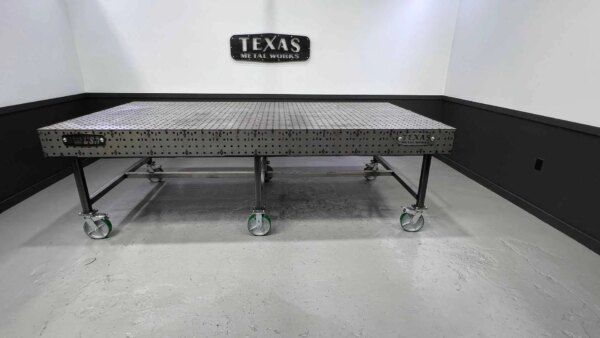
Want to Browse the Full Catalog?
Skip the configurator and shop all welding tables, tops, legs, and accessories directly.
Browse All ProductsShowing 13–24 of 56 resultsSorted by popularity

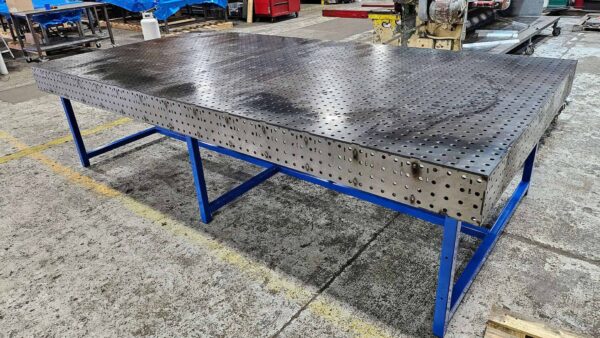
Welding Table – 70″ x 140″ Fully Fabricated Weld Tables
Price range: $9,999.00 through $12,239.00
Select options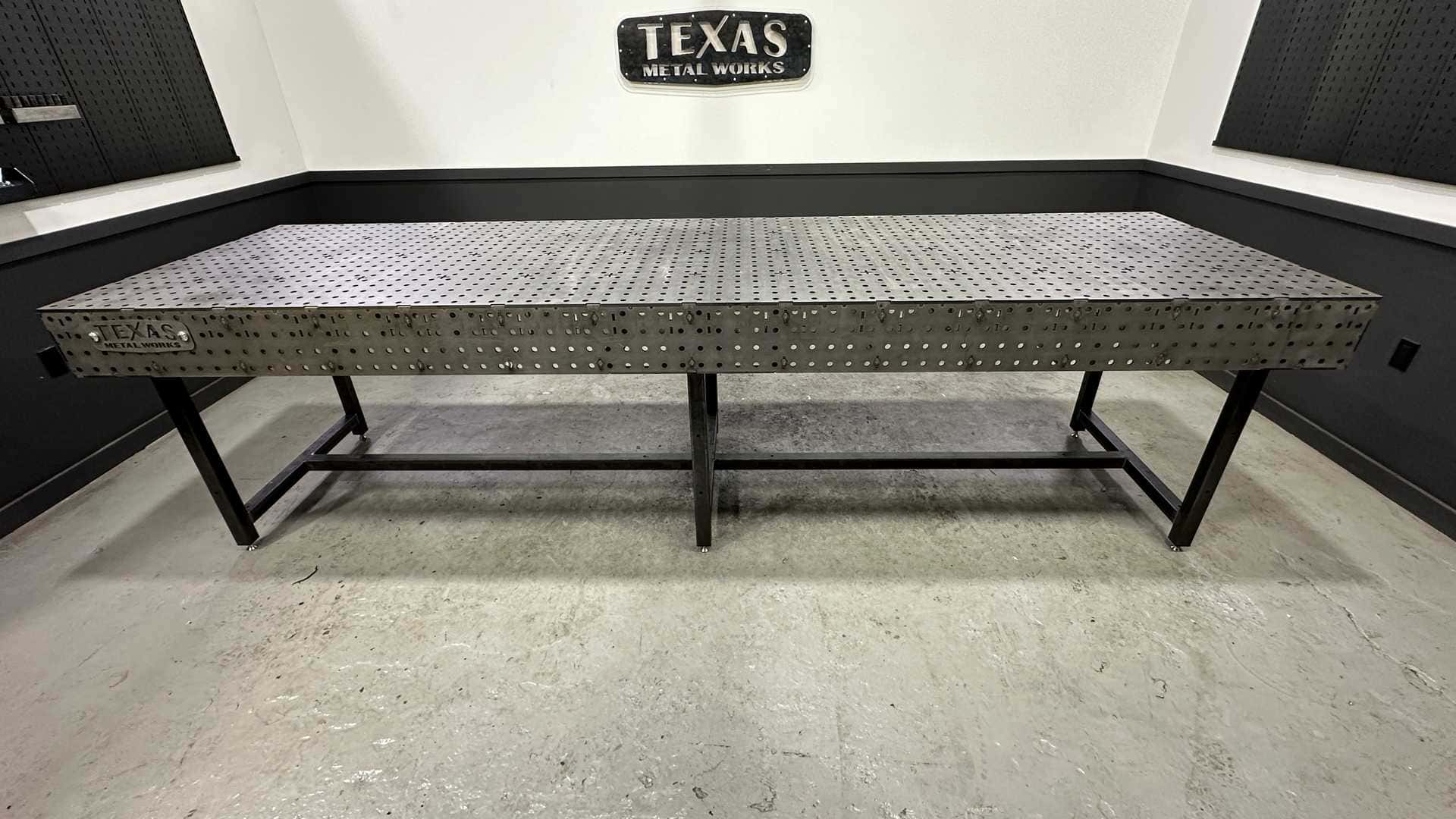
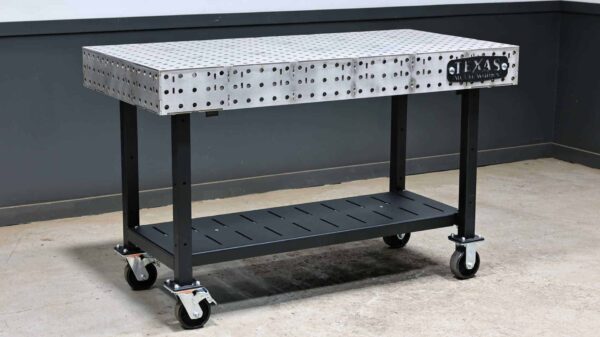
Welding Table – 40″ x 140″ Fully Fabricated Weld Tables
Price range: $4,816.00 through $6,798.00
Select options
Welding Table – 30″ x 100″ Fully Fabricated Weld Tables
Price range: $2,550.00 through $5,659.00
Select options

Welding Table – 70″ x 120″ Fully Fabricated Weld Tables
Price range: $8,399.00 through $11,328.00
Select options
Welding Table – 60″ x 140″ Fully Fabricated Weld Tables
Price range: $8,399.00 through $11,328.00
Select options
DIY Welding Tables, Weld Tables, Welding Table Tops
70"x140" - Welding Table Top
Price range: $9,999.00 through $10,999.00
Select options
DIY Welding Tables, Weld Tables, Welding Table Legs
70"x120" - Welding Table Legs
Price range: $400.00 through $999.00
Select options
DIY Welding Tables, Weld Tables, Welding Table Tops
70"x120" - Welding Table Top
Price range: $8,399.00 through $9,799.00
Select options
DIY Welding Tables, Weld Tables, Welding Table Legs
60"x140" - Welding Table Legs
Price range: $400.00 through $999.00
Select options
DIY Welding Tables, Weld Tables, Welding Table Tops
60"x140" - Welding Table Top
Price range: $8,399.00 through $9,799.00
Select optionsNeed Help Choosing?
Use the configurator to pick your table type, size, and options step by step.
Open ConfiguratorFully Fabricated Table vs DIY Table Kit
Both use the same precision-machined tops and 5/8" hole patterns. The difference is how much assembly you want to do and how much you want to spend.
Fully Fabricated Table
Best for shops that want ready-to-weld
- Ships fully welded with legs, leveling feet, and optional shelf
- Choose 1/4", 3/8", or 1/2" top thickness
- 15 standard sizes from 30x40 to 70x140
- Optional powder coating on base
- Surface flatness held to tight tolerances
- No assembly beyond leveling
DIY Table Kit
Best for custom builds and tighter budgets
- Buy top and legs separately
- Same precision-machined tops as fabricated tables
- Pair with your own base or TMW leg kits
- Lower cost per square foot of work surface
- Ideal for custom heights or non-standard frames
- Ships flat for easier handling
Welding Table Size Guide
All tops are A572-50 steel with 5/8" holes on 2" centers. Available in 1/4", 3/8", and 1/2" thickness.
| Size | Dimensions | Holes | Best For |
|---|---|---|---|
| 30 x 40 | 2.5' x 3.3' | 300 | Small parts, bench work |
| 30 x 60 | 2.5' x 5' | 450 | Light fabrication, tight spaces |
| 30 x 80 | 2.5' x 6.7' | 600 | Long narrow weldments |
| 30 x 100 | 2.5' x 8.3' | 750 | Pipe and rail work |
| 40 x 40 | 3.3' x 3.3' | 400 | Compact general purpose |
| 40 x 80 | 3.3' x 6.7' | 800 | Mid-size fabrication |
| 40 x 140 | 3.3' x 11.7' | 1,400 | Long production runs |
| 50 x 50 | 4.2' x 4.2' | 625 | Square layout, versatile |
| 50 x 100 | 4.2' x 8.3' | 1,250 | Standard shop table (4x8) |
| 60 x 60 | 5' x 5' | 900 | General fabrication (5x5) |
| 60 x 100 | 5' x 8.3' | 1,500 | Large shop table (5x8) |
| 60 x 120 | 5' x 10' | 1,800 | Heavy fabrication (5x10) |
| 60 x 140 | 5' x 11.7' | 2,100 | Production cell |
| 70 x 120 | 5.8' x 10' | 2,100 | Wide heavy fabrication |
| 70 x 140 | 5.8' x 11.7' | 2,450 | Largest standard config |
All sizes available in Standard (carbon steel) and Stainless Steel. DIY tops available in most sizes. Custom sizes available on request.
Weld Tables FAQ
The industry-standard height is 36″. But that is flawed because it forces many welders to lean forward, causing back strain. The optimal height depends on the welder’s height.
| Welder’s Height | Optimal Table Height |
| 5’2″ – 5’4″ | 34″ – 36″ |
| 5’5″ – 5’8″ | 36″ – 38″ |
| 5’9″ – 6’0″ | 38″ – 40″ |
| 6’1″ – 6’4″ | 40″ – 42″ |
| Over 6’4″ | 42″ – 44″ |
They typically range from 2′ x 3′ up to 5′ x 10′. However, modern 3D tables are designed to be modular, so you can bolt them together or add extensions and blocks to create virtually any size or configuration you need.
Table Type: 3D tables are inherently structurally stronger. You’re no longer relying on just the thickness of the top since there is an engineered structure supporting it. The top doesn’t need to be nearly as thick.
Material Choice: A tougher material (like A572-50) can “spring back” from an impact better than a softer one (like A36), potentially allowing for a thinner-but-stronger surface.
Workpiece Requirements: If you’re welding small parts and tubing, a thinner surface is fine. If you’re building heavy items (like fire engine bumpers) and risk massive impacts, you need more mass to prevent damage.
2D Tables: These are traditional flat, planar surfaces, often just a plate of steel. They are simpler, more affordable, and suitable for general welding, but are harder to expand and are generally not as flat or strong.
3D Tables: These are newer designs that feature a flat top plus sidewalls, all with fixture holes. This design makes them significantly stronger (up to 30 times), an order of magnitude flatter, and highly modular. You can bolt accessories, extensions, or even other tables to the sidewalls.
Pros: Extremely lightweight and portable with excellent corrosion resistance (will never rust). Its excellent thermal conductivity dissipates heat very quickly. It’s a non-ferrous, non-magnetic option that’s great for welding stainless or aluminum parts without contamination. Least likely material to scratch the parts you’re working on.
Cons: It’s a much softer material, making it prone to scratches and dents from heavy use. It’s non-magnetic, which can be a disadvantage for some fixturing. It’s also more expensive than carbon steel and provides less stability due to its low weight.
Pros: It’s the best choice when welding stainless steel parts to prevent contamination. It offers superior rust and corrosion resistance, making it ideal for humid environments or industries with high hygiene standards (like food processing or medical).
Cons: The cost is the biggest drawback, often being 3 times as much as carbon steel. It has a slightly lower thermal conductivity than carbon steel. You can’t use magnetic tooling on stainless.
Pros: Offers excellent surface flatness, stability, and vibration dampening due to its high mass. It has better natural corrosion resistance than carbon steel.
Cons: More brittle than steel; a hard impact can crack it. Repairs are difficult or impossible. It has lower thermal conductivity (retains heat longer). It’s significantly heavier, less portable, and more expensive. It can also suffer from iron contamination when welding stainless steel.
Pros: Generally lighter than cast iron, more affordable, and widely available. It offers excellent strength, durability, and high thermal conductivity (dissipates heat quickly). It’s also extremely easy to repair or modify.
Cons: Can warp over time with excessive heat (thicker surfaces mitigate this). Welding stainless steel on it can cause carbon contamination (can be prevented with spacers). It is susceptible to rust if not maintained with oil or anti-spatter fluids.
The four most common materials, in order of popularity, are:
- Carbon Steel
- Cast Iron
- Stainless Steel
- Aluminum (often an Al/Cu alloy)
Need a Custom Solution?
From custom weld tables to full fabrication projects, our engineering team can bring your vision to life. Get in touch for a free quote.